 Visit Edinburgh Guide
St Giles' Cathedral
St Giles' Cathedral is the church in the middle of Edinburgh's Old Town with the stone crown on top of it — the one in every photograph of the skyline, halfway between the castle and the palace. It has been a place of worship since 1124, it was John Knox's parish church at the Reformation, and it is free to walk into, with a suggested donation of £10 (about $14). Two things inside are worth planning around: the crown steeple over your head, and the Thistle Chapel in the south-east corner, which has four steps at its door and its own rules. This page has the day-by-day hours, what the cathedral actually asks you for, the notice that has paused its guided tours, and the twenty-minute route round the inside. It is one stop in the rest of the city, place by place.
Quick answer Free, no ticket, 10:00 on weekdays — and 13:00 on Sunday
St Giles' Cathedral is free to enter and needs no ticket: you walk in through the ramped north door, Monday to Friday 10:00–18:00, Saturday 09:00–17:00 and Sunday 13:00–17:00. The cathedral asks for a suggested donation of £10 (about $14) and charges £5.50 (about $7.50) for a phone audio tour. Everything else inside — the crown steeple, the Thistle Chapel, the Covenant, the Burns window — costs nothing to look at.
Key takeaways
- Sunday is the trap. Morning belongs to the 09:30 and 11:00 services and general visiting does not start until 13:00 — the hours table has the full week, including the Saturday Quiet Hour.
- The cathedral's own volunteer-led guided tours are paused until mid-October, so the only commentary on offer right now is the £5.50 phone audio tour or a guide who brings you in from outside: the two-hour Old Town walk stops here for £18 (about $25).
- Two things justify the visit: the crown steeple, one of only two medieval ones left in Scotland, and the Thistle Chapel, which has four steps at its entrance and a video for anyone who cannot take them.
- There are no public toilets in the building — the nearest accessible one is on the ground floor of the National Library on George IV Bridge, five minutes away.
Key facts
Opening hours
| Monday to Friday, all year | 10:00–18:00 |
|---|---|
| Saturday | 09:00–17:00 |
| Sunday | 13:00–17:00 |
| Saturday Quiet Hour | 09:00–10:00 |
Closed None published. Sunday visiting starts at 13:00 because of the 09:30 and 11:00 services; a 15-minute prayer service runs at 12:00 on weekdays and visiting continues around it
Admission
- Adult
- Free. The cathedral's own words: "St Giles' Cathedral is run by donations. Please give as you are able, our suggested donation is £10" (about $14)
- Reduced
- Phone audio tour £5.50 (about $7.50), paid at the front desk or pre-paid online; it runs about 25 minutes in English, German or Ukrainian
- Free
- Everyone, at every advertised hour. No photography charge is published anywhere on the cathedral's own site — we looked on 30 August 2026
Planning it
- Time needed
- Not stated by the cathedral. Our routing: 20 to 30 minutes for the interior, 45 with the audio tour
- Book ahead
- Optional — walk-up usually fine
- Address
- St Giles' Cathedral, High Street, Edinburgh EH1 1RE — ramped main door on the north side; the Thistle Chapel also has its own east door
There is no ticket to St Giles', so this compares what a visit can cost you rather than what you must pay: nothing at all, the suggested donation, the audio tour, or a guide who walks you here as part of a wider Old Town route. The cathedral's figures and the operators' prices were read on 30 August 2026.
| Way in | Price | What it covers | Cancel | Book |
|---|---|---|---|---|
| Walk in during visiting hours | Free; suggested donation £10 (about $14) | The whole interior, self-guided: nave, aisles, memorials, the Covenant and the Thistle Chapel | — | Official site |
| Phone audio tour | £5.50 (about $7.50) | About 25 minutes of commentary on your own phone, in English, German or Ukrainian | Paid at the front desk or online in advance | Official site |
| Group of more than five people | Free; the same suggested donation | A confirmed arrival slot, and a volunteer guide if one happens to be free | Must be booked in advance by form | Official site |
| Old Town walking tour that stops here, 2 hours | £18 (about $25) | A guide outside the west door, then Mercat Cross, the Grassmarket and Victoria Street | Free up to 24 hours before | Check Availability |
| Castle ticket with a walk down this street, 135 minutes | £51 (about $69) | Guide, Edinburgh Castle entry and stops here on the way up | Free up to 24 hours before | Check Availability |
The three official rows link straight to the cathedral with nothing added to the URL. The two tour rows are affiliate links to GetYourGuide: the prices are the operators' own, we take a commission if you book through them, and it costs you nothing extra. Neither tour goes inside the building as a ticketed visit — St Giles' sells no tour of itself. Prices and ratings read on 30 August 2026. The cathedral's figures come from its own visitor-information page and the tour prices are the operators' own, listed in pounds on GetYourGuide, with dollar figures at £1 = $1.36.
The guided walks that stop at the cathedral
Worth saying plainly before you scroll: the cathedral runs no bookable tour of its own, and no operator sells entry to it, because entry is free. What these products sell is a guide, and every one of them treats St Giles' as a stop on a wider Old Town route rather than a destination. Prices, ratings and review counts are the operators' own, read on 30 August 2026.
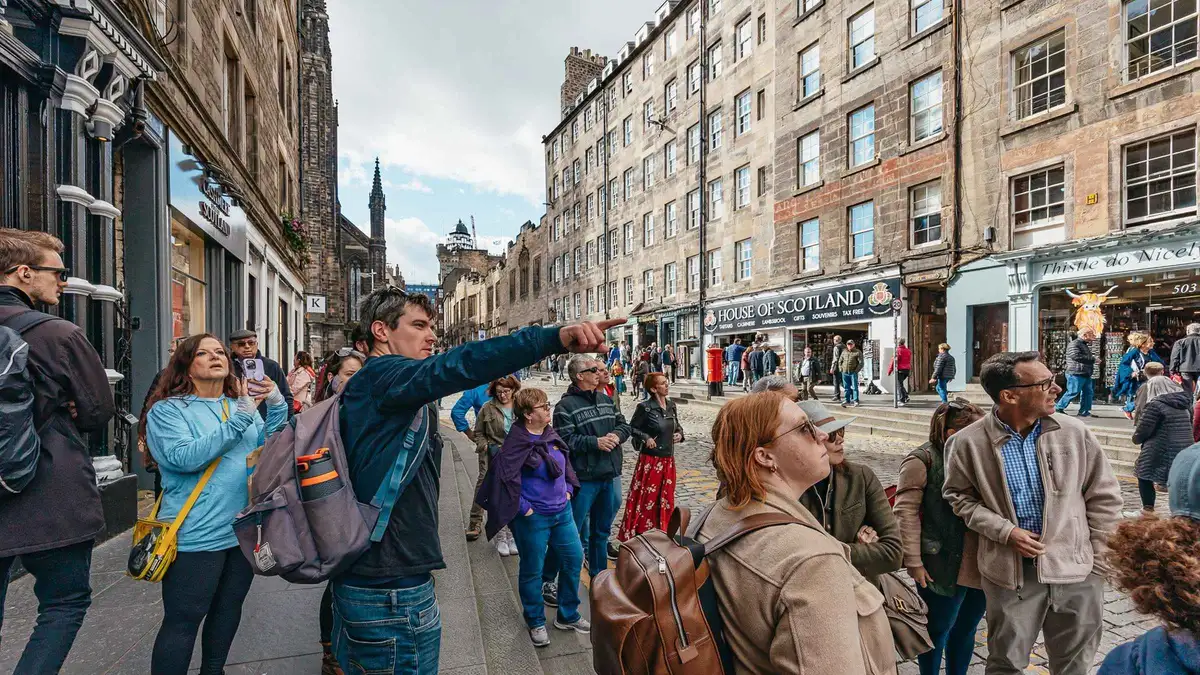 from £18
Edinburgh: Old Town History and Tales Walking Tour
Two hours through the UNESCO Old Town covering Mercat Cross, St Giles' and the Grassmarket, plus the Harry Potter locations. Ends in the centre near bars and transport; English only.
Check Availability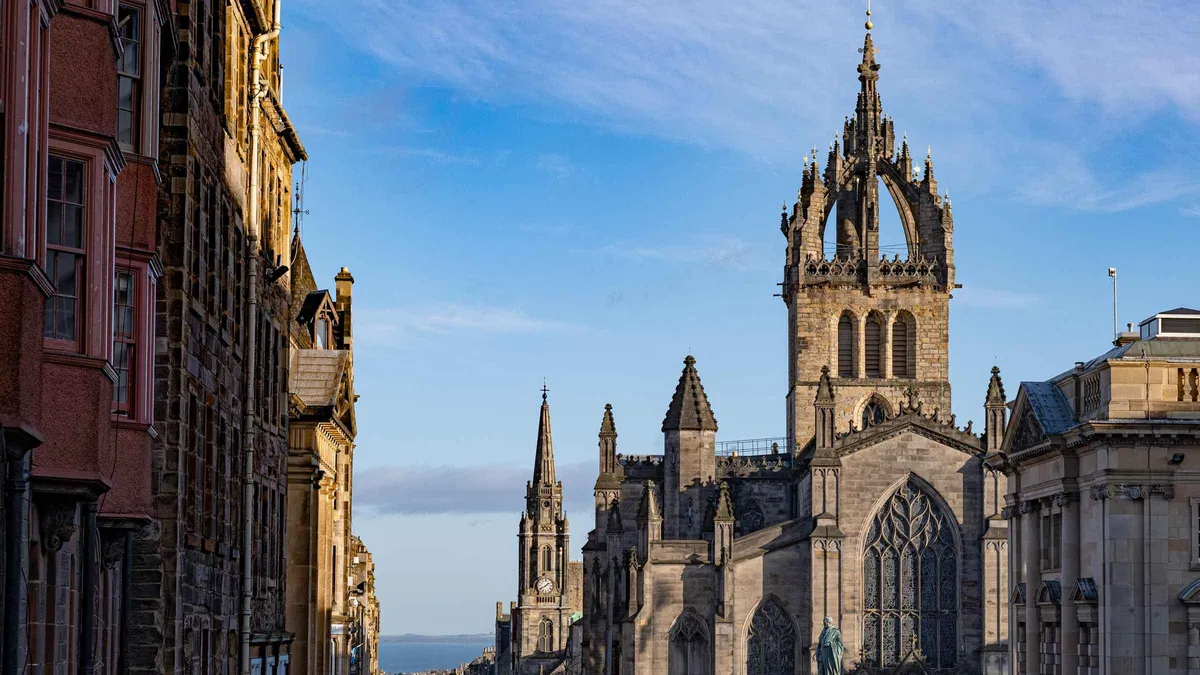 from £16
Edinburgh: Old Town History Walking Tour
The cheapest Old Town walk on the site, two hours past St Giles', Victoria Street and Greyfriars Kirkyard with the Greyfriars Bobby statue. Runs in four languages rather than English only.
Check Availability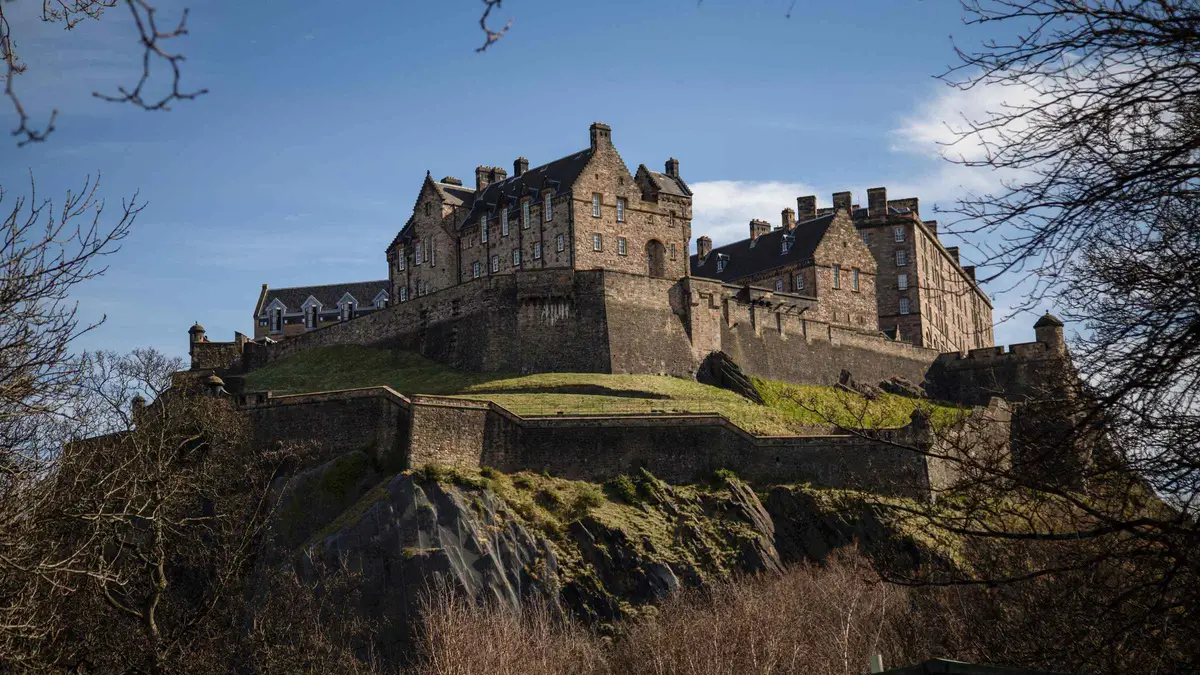 from £51
Edinburgh Castle & Royal Mile Walking Tour - Ticket Included
The only castle option here that first walks the Royal Mile, with stops at St Giles', Victoria Street and the Grassmarket before 45 minutes inside the castle. Runs 135 minutes.
Check AvailabilityPrices, ratings and details are the platform's own, checked 2026-08-30; dollar figures are the listed prices — the platform bills in your account's currency.
What St Giles' Cathedral actually costs, and the ticket the newspapers reported
The short version: nothing. The longer version has a suggested figure, one paid extra, and a change that was announced for this month and had not appeared on the cathedral's own pages when we read them on 30 August 2026.
St Giles' publishes one sentence about money and it is worth quoting exactly: "St Giles' Cathedral is run by donations. Please give as you are able, our suggested donation is £10." A suggestion is not a charge.
| What | Price | Approx. USD | Where you pay | Our note |
|---|---|---|---|---|
| Entry | Free | — | Nowhere | No ticket, no timed slot, no queue system |
| Suggested donation | £10 | about $14 | Donation points inside, or online | A suggestion, printed in the cathedral's own words |
| Phone audio tour | £5.50 | about $7.50 | Front desk, or pre-paid online | Your own phone and headphones; about 25MB to download |
| Photography | Not published | — | — | No permit or fee appears anywhere on the cathedral's own site |
| Group visit, six people or more | Free, donation as above | — | Booked by form | Advance booking is compulsory, a guide is not guaranteed |
Nobody stops you at the door, there is no barrier, and the donation points are inside. The only thing the cathedral sells to an individual visitor is the audio tour at £5.50.
What the cathedral does not publish is a photography charge. We looked at the visitor information page, the access page and the group-visits page on 30 August 2026 and none of them mentions a permit, a fee or a fixed price for taking pictures; third-party guides that quote a couple of pounds for a photo permit are not repeating anything the cathedral prints. Photography during a service is a different matter — that is asked against, and it is the one rule the building enforces by asking.
The £12 ticket reported for September 2026
In June 2026 the Edinburgh Evening News and The Scotsman reported that St Giles' planned to charge tourists £12 (about $16) for entry from September, with Scottish residents and under-16s continuing to get in free, and the money going towards repair and maintenance bills the Church of Scotland has put close to £1 million a year. That is press reporting, not the cathedral's own publication, and it matters for one reason: we read the cathedral's visitor-information page on 30 August 2026 and it still said free entry with a £10 suggested donation, with no ticket link, no prices and no start date.
So the honest position on the day this page was written is: free, and about to change on a date nobody official has printed. If you are reading this later in the autumn, take the door price you find over the figure here, and treat any "free entry" claim on a page with no check date — including this one after a few months — as out of date. Our figures were read on 30 August 2026 and we re-read them before each update.
St Giles' Cathedral opening times, and the Sunday most itineraries get wrong
Hours read from the cathedral's own visitor-information page on 30 August 2026. Two of these five rows are the reason people arrive at a locked-feeling building: Sunday morning, and the last half hour before closing.
This is a working church before it is a visitor attraction, and the timetable shows it. On a weekday the doors are open for eight hours; on Sunday for four, because the morning belongs to worship.
| Day | Open to visitors | What is happening | Our note |
|---|---|---|---|
| Monday to Friday | 10:00–18:00 | A 15-minute prayer service at 12:00 | The longest window of the week; the audio commentary is not played during the noon service |
| Saturday | 09:00–17:00 | Quiet Hour 09:00–10:00 | The building opens an hour earlier than any weekday |
| Sunday | 13:00–17:00 | Services at 09:30 and 11:00, music at 18:00 | Turn up at 10:00 on a Sunday and you are three hours early for visiting |
| Saturday Quiet Hour | 09:00–10:00 | Reduced noise, lighting and crowding | Deliberately set up for neurodivergent visitors and anyone sensitive to sound and light — and, incidentally, the emptiest hour of the week |
| Any day, last 30 minutes | Until closing | Staff begin closing the aisles | Give yourself more than half an hour if the Thistle Chapel is the reason you came |
There is no published last-entry time and no closed day in the year, which is unusual for a building of this size on this street.
Worship, and being a visitor during it
You are not shut out during services — you are welcome at them, which is a different thing. On Sunday there are services at 09:30 and 11:00 with the choir and the organ, and a programme of music at 18:00; on weekdays there is a 15-minute prayer service at noon. What changes during a service is the etiquette: photography of worship is asked against, and the cathedral's own access notes say the audio commentary cannot be switched on while the noon service is running.
If you are timing a tight day, the practical version is simple. Arrive on a weekday between 10:00 and 16:30 and you can do the interior at your own pace. Arrive Saturday at 09:00 and you get the Quiet Hour. Arrive Sunday morning and your options are to go to a service or to come back after 13:00 — the Royal Mile outside will happily absorb the wait, and the Real Mary King's Close two minutes downhill runs on its own timed tickets.
The crown steeple: the outline you already know from photographs
The stone crown is the reason the cathedral is recognisable from Calton Hill, from the castle esplanade and from the bottom of the Mound. It is also older and rarer than most visitors realise.
Eight buttresses spring from the top of the tower — four from the corners, four from the middle of each side — and meet under a small crowned lantern. Dendrochronological analysis dates the steeple to between 1460 and 1467. It is one of only two surviving medieval crown steeples in Scotland; the other is at King's College Chapel in Aberdeen and is at least four decades younger. St Giles' is the only medieval example built on eight buttresses rather than four, which is why it looks heavier and more like a real crown than the Aberdeen version.
The design was not a Scottish invention: it came from St Nicholas' in Newcastle. The historian John Hume called the steeple "a serene reminder of the imperial aspirations of the late Stewart monarchs", and the Victorian minister Cameron Lees put it more bluntly: "Edinburgh would not be Edinburgh without it."
You cannot climb it. There is no tower visit, no viewing platform and no ticket for one — if a stair-climb with a view is what you are after, the free hill at Calton Hill and the tower there are the nearest equivalent. The best places to actually see the crown are from the pavement on the far side of the High Street, from George IV Bridge looking north, and from the eastern end of the Old Town ridge.
The exterior you are looking at is Georgian
One thing that puzzles people who expect medieval stone: the outside walls are smooth, grey and uniform. When the Luckenbooths and the Tolbooth that crowded against the church were demolished in the early nineteenth century, the exposed walls turned out to be leaning outward by as much as a foot and a half. William Burn encased the whole building in polished ashlar from Cullalo in Fife between 1829 and 1833, tied back with iron cramps, and reworked the doorways and parapet at the same time.
The crown steeple is medieval; the box underneath it, visually, is not.
The Thistle Chapel: the one room worth queueing behind other people for
A chapel the size of a large drawing room, built in fourteen months, for sixteen knights. It is the single most concentrated piece of craftsmanship in the building and the part visitors most often miss because its door looks like a side passage.
The Order of the Thistle is Scotland's chivalric order, founded in 1687 by James VII, who ordered Holyrood Abbey fitted out as its chapel. A mob wrecked that interior the following year, before the knights ever met in it, and the Order went without a home for more than two centuries. In 1906, after the sons of the 11th Earl of Leven gave £24,000 from their father's estate, Edward VII ordered a chapel built on the south side of St Giles'.
Robert Lorimer got the commission, and the trustees insisted the craftspeople be Scottish: Phoebe Anna Traquair for the enamels, Douglas Strachan for the glass, Joseph Hayes for the stone, the brothers William and Alexander Clow for the woodwork. Building started in November 1909 and the chapel was finished a little over a year later. George V knighted Lorimer at its opening in July 1911. The knights and ladies of the Thistle still meet in it at least once a year, and their banners hang next door in the Preston Aisle — those have been there since 1953.
What you are looking for inside is the carving: the stall canopies, the bosses, the small animals worked into the woodwork by the Clows, and the stall plates that keep being added as new knights are installed. It is a room designed to be read slowly, and it holds perhaps a dozen people comfortably, so the polite move at a busy hour is to wait outside the screen rather than crowd it.
Getting into the chapel, and the four steps
The chapel sits in the south-east corner of the church. You reach it from inside through the south choir aisle, and it also has its own door on the east side of the building. There are four steps at the chapel entrance, and no ramp: the cathedral's access page says that if you cannot manage them, "a video available, or we can find you a guide" — ask at the front desk rather than assuming you are shut out.
The chapel closes to visitors for Thistle services and occasional private events; nothing about those dates is published in advance, so if it is the reason for your visit, ask at the desk when you come in rather than walking the length of the nave first.
What to look at inside, in the twenty minutes most people give it
A route rather than a catalogue: seven things, in the order you meet them walking clockwise from the north door. Dates and attributions are from the building's own memorials and from the Wikipedia article on the cathedral, which is unusually well sourced on the interior.
The Burns window, west end. The great west window is a memorial to Robert Burns, designed by the Icelandic artist Leifur Breiðfjörð and installed in 1985 after the Victorian glass that stood there failed. It is the most modern thing in the building and the only window most people photograph. Breiðfjörð also made the blue glass and metal screen around the west door in 2008.
Jenny Geddes' stool, south nave aisle. On 23 July 1637 the reading of a new prayer book started a riot in this church, and tradition says a market trader named Jenny Geddes threw her stool at Dean James Hannay. The riot fed directly into the National Covenant and the wars that followed. The cathedral marks it twice: an 1885 plaque in the floor between the south nave aisles for the spot, and Merilyn Smith's bronze sculpture of a stool, put there in 1992. The plaque to Hannay himself went up in 1882 — the two men and the stool are commemorated within a few metres of each other.
The National Covenant, Chepman Aisle. St Giles' holds one of the original copies of the 1638 Covenant, signed by leading Covenanters including Montrose, Rothes and Cassilis. It stayed in the family of the Laird of Dundas until 1924 and was given to the cathedral in 1926. It stands in a plain oak frame, and it is easy to walk past.
Montrose and Argyll, facing each other. The two largest Victorian monuments in the building commemorate enemies: James Graham, 1st Marquess of Montrose, in the Chepman Aisle (1888), and Archibald Campbell, 1st Marquess of Argyll, in the St Eloi Aisle (1895). Both are alabaster and marble, both hold life-size effigies, and they were installed seven years apart in a church that had executed the argument between them in the seventeenth century.
Then the chapel, the organ and the heart in the setts
The Thistle Chapel, south-east corner. Covered above — go in through the south choir aisle.
The organ, south transept. Rieger Orgelbau finished it in 1992, in a red-stained Austrian oak case designed by Douglas Laird to imitate the prow of a ship. It has 4,156 pipes, most of them tin, and a ring of 37 bells by the Whitechapel Bell Foundry. It replaced a Harrison & Harrison instrument of 1878 — the first organ in the building since the Reformation, because for three centuries after 1560 there wasn't one.
The Heart of Midlothian, outside the west door. A heart shape set into the setts, marking the site of the Tolbooth that stood here until 1817 and served as prison and place of execution. Passers-by spit on it. Nobody official asks them to; it is a piece of Edinburgh habit rather than a rule, and it is the one part of a St Giles' visit that happens outside the building.
How long you actually need
The cathedral does not publish a suggested visit length. Ours: twenty minutes to walk the route above at a normal pace, thirty if the Thistle Chapel is busy and you wait for space, and about forty-five if you take the audio tour, which the cathedral says runs about 25 minutes and which you will pause and restart. That makes St Giles' the easiest large sight in the Old Town to slot into a half-hour gap between two timed tickets.
Nine hundred years in six paragraphs, and why a Presbyterian church is called a cathedral
The question the search engines get most often about this building is whether it is Catholic or Protestant, and the answer takes a minute of history rather than a word.
The foundation is usually dated to 1124 and attributed to David I. The first church was a small Romanesque building, of which fragments survive; the Gothic church you walk into replaced it during the fourteenth century and kept growing until the early sixteenth. Richard II's army burned it in 1385 and the scorch marks were still visible on the crossing pillars in the nineteenth century. Pope Paul II raised it to collegiate status in 1467.
In 1559 the church turned Protestant, with John Knox — the central figure of the Scottish Reformation — as its minister. That is the hinge. Before 1559 it was a Roman Catholic parish church with as many as fifty side altars; after it, the interior was stripped and the pulpit became the focus. Today it belongs to the Church of Scotland, which is Presbyterian, and it is the only answer to the Catholic-or-Protestant question that is actually correct: Catholic for four hundred years, Protestant ever since.
After the Reformation the building was chopped up. It housed several congregations at once behind internal partitions, and also served as a prison, a courthouse and a meeting place for the Parliament of Scotland. Charles I made it a cathedral in 1633, when he created a Diocese of Edinburgh. His attempt to impose a prayer book on the Scottish church caused the riot of 1637; the National Covenant followed in 1638, and with it the wars that ran through the rest of the century.
Why a Presbyterian church is still called a cathedral
The title is the part that confuses people. St Giles' was a cathedral between 1633 and 1638, and again between 1661 and 1689, during the two periods when the Church of Scotland had bishops. It has not had one since 1689, and a church with no bishop has no cathedral — so, strictly, the name is a historical hangover, shared with Glasgow Cathedral and Dunblane. Its other title, the High Kirk of Edinburgh, is the accurate one, and it is what the congregation uses.
The Victorians made it a single church again. William Burn's work of 1829–33 re-cased the exterior; William Hay's restoration of 1872–83, funded by the publisher William Chambers, took out the last internal partitions. Chambers wanted "a Westminster Abbey for Scotland" and filled the aisles with memorials to notable Scots, which is why so much of what you look at inside is younger than the building by five centuries.
It is still the national church for national moments. The Order of the Thistle holds its services here. Queen Elizabeth II lay at rest in the building in September 2022 before the journey south, and the Honours of Scotland were presented to King Charles III here in 2023 — both events the cathedral names first on its own homepage. In 2018 it was Scotland's fourth most visited site, with over 1.3 million visitors.
Guided tours are paused, and the audio tour is on your own phone
This is the most date-sensitive thing on the page, and it changes what a visit feels like. Read on the cathedral's visitor-information page on 30 August 2026 and quoted exactly.
The notice reads: "Guided Tours have been temporarily paused for tour guide training, and will resume in mid-October." No date is given beyond mid-October, and no booking page is open.
| What is on offer | Cost | Languages | Our note |
|---|---|---|---|
| Cathedral guided tour | — | — | Paused for guide training until mid-October; no booking page is open |
| Phone audio tour | £5.50 (about $7.50) | English, German, Ukrainian | About 25 minutes; your own phone, roughly 25MB, no handset to borrow |
| Digital visitor guide | Free | Ten, including Gàidhlig, Mandarin and Japanese | Text rather than audio, and the better option if you dislike commentary |
| Group visit, six people or more | Free, donation suggested | English | Compulsory booking; slots Mon–Fri 10:00–11:00 or 12:30–17:00, Sat 09:00–16:00, Sun 13:00–16:00 |
| Guide who brings you in from the street | £16–£18 (about $22–$25) | Up to four, depending on the operator | The only live commentary available here at the moment |
So from now until at least the middle of October, a visit to St Giles' is a self-guided visit, whatever an older guidebook or a third-party listing tells you about daily tours at 10:30 and 14:30.
What replaces it is a phone tour. You pay £5.50 (about $7.50) at the front desk or online, scan a code, and listen on your own device — the cathedral is explicit that there is no handset to borrow, that you need about 25MB of download space, and that headphones are a good idea. It runs about 25 minutes and exists in English, German and Ukrainian. The free digital visitor guide, which is text rather than audio, covers more languages: English, French, Gàidhlig, Portuguese, Spanish, Ukrainian, German, Mandarin, Italian and Japanese.
Groups are the exception to the no-tours rule. Any group of more than five people must book in advance through the cathedral's group form, and slots are Monday to Friday 10:00–11:00 or 12:30–17:00, Saturday 09:00–16:00 and Sunday 13:00–16:00. You can request a guide for the group, but the cathedral says plainly that guides are volunteers and availability cannot be guaranteed — you are told after your visit is confirmed.
If you want a person telling you the stories
Then you are looking for a guide who brings you here from outside. The two-hour Old Town history and tales walk at £18 (about $25) meets by the Adam Smith statue up the street and covers this church, the Mercat Cross and the Grassmarket; the cheaper two-hour walk at £16 (about $22) runs in four languages rather than English only and takes in Greyfriars Kirkyard as well. Neither buys you anything inside the building that you could not see for free five minutes earlier — what you are paying for is the commentary, and at the moment that is the only live commentary available here at all.
Evening walks are a different product again: the ghost tours that meet on this street go underground rather than into the church, and they are compared on the ghost tours page.
Doors, ramps, toilets and how to get here
The practical layer, and one genuine problem: there is no public toilet in the building.
The cathedral sits on the south side of the High Street, in the middle of the ridge that runs from the castle down to Holyrood — about five minutes on foot uphill from Waverley station, three minutes from the George IV Bridge crossing, and ten from the tram stops at Princes Street or St Andrew Square. The main visitor door is on the north side facing the street.
Access is better than the building's age suggests: there is a ramp into the building and a second ramp just inside, and that inner ramp is the main walkway everyone uses, so a wheelchair user is not sent round the back. Two manual wheelchairs can be borrowed on request. A hearing loop runs through the building — switch your aids to the telecoil programme. Dogs are allowed inside. The steps to watch are the four at the Thistle Chapel and the ones into the shop and side aisles, which the cathedral states are not wheelchair accessible.
There is no parking at the cathedral. Two Blue Badge bays sit behind the building next to the Mercat Cross in Parliament Square; they cannot be booked. Staff will call a taxi for you on request, which is a small thing that matters at the end of a long day on the setts.
- Toilets: none in the cathedral. The nearest accessible toilet is on the ground floor of the National Library of Scotland on George IV Bridge, about five minutes' walk.
- Contact: info@stgilescathedral.org.uk, +44 (0)131 226 0674.
- Getting around the wider city: fares, the tram and the day tickets are on the getting around page.
- Bags and cases: nothing is published about luggage; there is no cloakroom, so plan around it.
St Giles' Cathedral map: the doors, the heart in the setts and what is next door
The cathedral's two doors, the pavement landmarks either side of it, and the four places within a five-minute walk. Building positions come from OpenStreetMap and the venues' own addresses; door pins are approximate to within a few metres.
Where to go when you walk back out
Walking times are our estimates from the High Street door.
The Real Mary King's Close
The seventeenth-century street sealed under the Royal Exchange, two doors along the same pavement. It is the opposite kind of visit — timed, ticketed, guided — so it is the obvious pairing with a free walk-in. Prices, slots and the September rise are on its page.
2 min walkGreyfriars Kirkyard
The burial ground that opened in 1562 precisely because the kirkyard here, on the south side of this church, had run out of room. Free, open around the clock, and the other half of the Covenanters' story that starts inside St Giles' with the Covenant in the Chepman Aisle.
8 min walkThe Royal Mile
You are standing on it, halfway down. The street guide runs it close by close, from the esplanade to the palace gates, and says which of the closes on either side of the cathedral are worth the detour.
on the doorstepSt Giles' Cathedral questions
Is St Giles' Cathedral free to enter?
Yes. There is no ticket and no timed entry; you walk in during visiting hours. The cathedral asks for a suggested donation of £10 (about $14) in its own words, and the only fixed price it publishes for an individual visitor is £5.50 (about $7.50) for the phone audio tour. Scottish newspapers reported in June 2026 that a £12 tourist ticket would begin in September — what the cathedral itself was publishing on 30 August 2026 is set out above, and it was still free.
Is St Giles' Cathedral Catholic or Protestant?
Protestant. It was a Roman Catholic parish church from its foundation, dated to 1124, until 1559, when it turned Protestant with John Knox as its minister at the Scottish Reformation. It belongs to the Church of Scotland, which is Presbyterian, and its accurate title is the High Kirk of Edinburgh — the history section explains why a Presbyterian church with no bishop is still called a cathedral.
What are St Giles' Cathedral opening times on a Sunday?
13:00 to 17:00. Sunday mornings belong to worship — services at 09:30 and 11:00, with a music programme at 18:00 — so general visiting does not start until one in the afternoon. Weekdays are 10:00–18:00 and Saturday is 09:00–17:00 with a Quiet Hour from 09:00 to 10:00. The full week is in the hours table, and if Sunday morning is your only slot, the Real Mary King's Close runs timed tours from earlier in the day.
What is the Thistle Chapel and can you go inside it?
It is the chapel of the Order of the Thistle, Scotland's chivalric order, built by Robert Lorimer between November 1909 and the end of 1910 and opened in July 1911. Yes, you can go in, at no extra cost, through the south choir aisle. There are four steps at the entrance and no ramp; the cathedral's access notes say a video or a guide can be arranged if you cannot take them. What to look for inside is above.
Does St Giles' Cathedral run guided tours?
Not at the moment. The cathedral's own notice, read on 30 August 2026, says: "Guided Tours have been temporarily paused for tour guide training, and will resume in mid-October." Until then the options are the £5.50 phone audio tour or a guide who brings you here from outside — the two-hour Old Town walk is the one that stops at this church. Groups of more than five must book in advance either way.
How long do you need at St Giles' Cathedral?
The cathedral publishes no suggested visit length. Ours is twenty minutes for the interior at a normal pace, thirty if the Thistle Chapel is busy, and about forty-five if you take the audio tour, which runs roughly 25 minutes. The seven-stop route is ordered so you can do it in either direction from the north door.
Are there toilets at St Giles' Cathedral?
No. The cathedral has no public toilets, and says so itself. The nearest accessible one is on the ground floor of the National Library of Scotland on George IV Bridge, about five minutes' walk — the directions section has the rest of the access detail, including the ramps, the hearing loop and the two Blue Badge bays behind the building.
Why is St Giles' Cathedral famous?
For three things. Its crown steeple, dated by tree-ring analysis to 1460–1467, is one of only two medieval crown steeples left in Scotland and the outline of the Edinburgh skyline. It was John Knox's church and the room where the 1637 prayer-book riot started the chain that led to the National Covenant, an original copy of which is inside. And it is where the country still holds its national moments, including the Order of the Thistle services. The history section has the dates.
The version of this that works
Go on a weekday, mid-morning, before the tour groups reach the middle of the ridge. Come in through the north door, turn right, do the seven-stop route clockwise, and give the Thistle Chapel the last ten minutes rather than the first three — it is the room that rewards standing still. Put £10 in the box if the visit was worth it to you, and skip the audio tour unless you like commentary; the digital visitor guide is free and covers ten languages.
If your only free slot is Sunday morning, do not come. Go to a service if that appeals, or use the hours before 13:00 on the Real Mary King's Close two doors down, then walk back up. If it is Saturday and you are an early riser, the 09:00 Quiet Hour is the best half hour anyone gets in this building.
Then keep walking south. Eight minutes over George IV Bridge puts you in Greyfriars Kirkyard, which exists because this church's own graveyard filled up in 1562 — the two visits belong together, and both are free. The rest of the city, with the same hours-price-map treatment on every page, starts from our Edinburgh guide.
St Giles' Cathedral on film: the interior, the chapel and the history
Three walk-throughs that show what the inside actually looks like — how bright it is, how the aisles are arranged, and how small the Thistle Chapel is compared with photographs of it. Ids taken from our verified list, embedded without cookies.
Edinburgh St Giles' Cathedral inside walking tour, 4K
An unhurried walk through the nave and aisles, which is the closest thing to seeing the scale before you arrive.
Video: LADmobInside St Giles' Cathedral: the Thistle Chapel
Includes the chapel itself, useful if you want to know what is behind that four-step doorway before you queue for it.
Video: CitlivkaSaint Giles' Cathedral history tour
The Knox, Covenant and Reformation history told in the building, filmed on site.
Video: HistoryWithMegsThird-party videos. Neither the channels nor the videos are connected to this site.
Page last reviewed 2026-08-30. Prices, hours and terms are set by the venue or operator and confirmed at checkout.
We may earn a commission if you book through one of our links, at no extra cost to you. Full affiliate disclosure