 Visit Edinburgh Guide
Is Arthur's Seat Worth the Climb? The Honest Verdict
Last reviewed 2026-08-30
Is Arthur's Seat worth it? For anyone who can manage an hour of steady uphill on rough ground, yes — this is a 250.5-metre extinct volcano inside a capital city, it costs nothing, there is no gate and no ticket, and the last few metres are bare rock you use your hands on. But there is a version of the same question nobody answers honestly: the famous Edinburgh skyline photograph, the one with the castle and the Old Town ridge in a single frame, is not taken from the summit. It is taken from a hill across the valley that takes ten minutes to walk up. This page gives the verdict, the reasons behind it, the paths that no longer exist, and the cheaper view that most visitors actually want. Prices are official 2026 fares read on historicenvironment.scot and cultureedinburgh.com on 30 August 2026; dollar figures are approximations at £1 = $1.36.
Quick answer The verdict, how long it takes and the ten-minute alternative
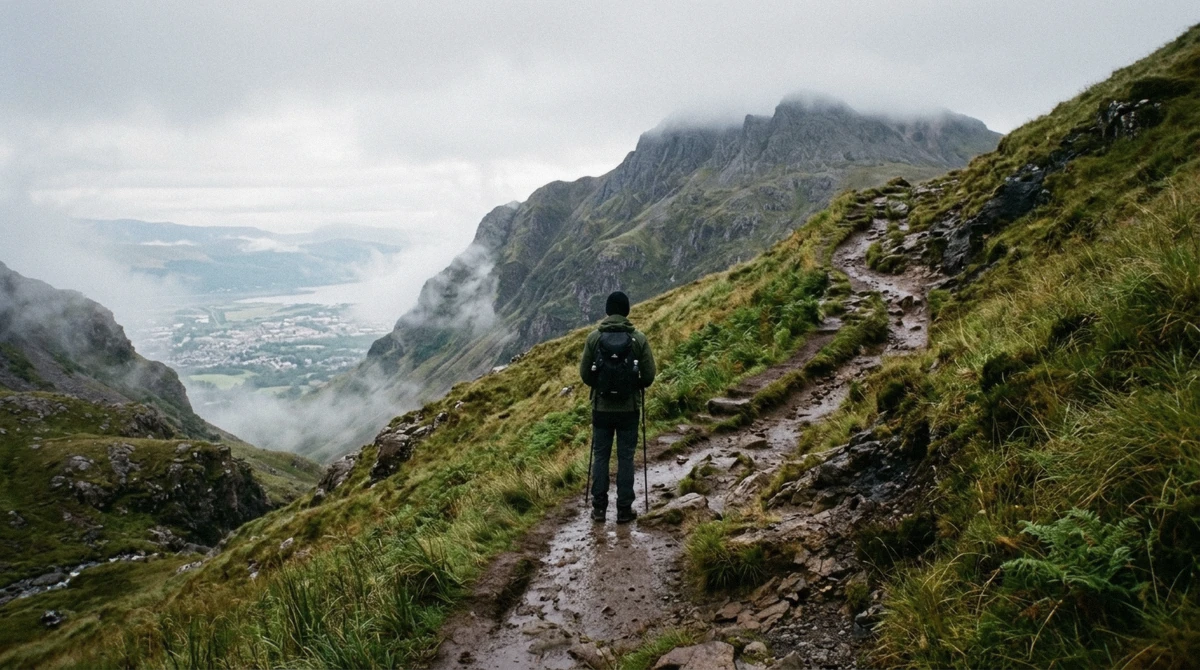
Yes, if you have a spare two hours, shoes with grip and no objection to wind. Arthur's Seat is free, ungated and open twenty-four hours a day in Historic Environment Scotland's own words, it rises to 250.5 m (822 ft), and most people walk up from the Palace end in 45 to 60 minutes. No, if what you want is the postcard view of the castle and the Old Town ridge — that photograph is taken from Calton Hill, which is a ten-minute staircase, and from the summit of Arthur's Seat the city has flattened into a map instead.
Key takeaways
- Nothing to book and nothing to pay: the hill and the four routes up it are free at every hour, and the only money in the whole outing is a £2.40 bus fare (about $3.30) or £1 an hour to park (about $1.40)
- The flat panoramic path in every older guidebook — the Radical Road under Salisbury Crags — has been closed since a rockfall in 2018 and is still closed today, so do not plan around it
- The ten-minute version of the same trip is Calton Hill: about 100 metres above sea level, a staircase rather than a climb, and the better photograph of the two
- The only ticket in this comparison is the Nelson Monument on that hill — £7.50 with the tower climb and £3.00 for the monument without it (about $10 / $4), and the rest of the city's prices are on one page
- Want a guide, a fixed start time and someone who knows which path is dry? The two-hour guided hike rates 4.9 from 124 reviews and the sunset climb with a Mountain Leader rates 5.0 from 68
What the climb actually is, before anyone tells you it is easy
Arthur's Seat is the eroded core of a volcano that stopped erupting around 340 million years ago, sitting inside Holyrood Park at the bottom of the Royal Mile. Historic Environment Scotland's visitor page says the park is open twenty-four hours a day, year-round, and free to visit. There is no entrance, no barrier, no opening time and no ticket office. You walk out of the Old Town, cross the road by the Scottish Parliament, and the path starts a minute beyond the park gate.
The standard route from that end gains the full height of the hill from near sea level, and our own routing puts it at 45 to 60 minutes up at an unhurried pace with photo stops. The short version is from Dunsapie Loch on the east side, high on Queen's Drive, where the road has already done most of the climbing and the walk to the top is 20 to 30 minutes. Neither figure is official: Historic Environment Scotland publishes no walking times, distances or step counts for any path in the park, and we say so rather than dressing an estimate up as a timetable. What is official is the safety wording, and it is blunt — beware of sheer drops, uneven and slippery surfaces, wear sturdy shoes with good grip.
There is nothing at the top
This is the part the photographs leave out. The summit is a small block of bare rock with a trig point on it, holding perhaps twenty people at a time. There is no shelter, no café, no water, no bin and no handrail. The nearest toilets are at the Holyrood Park Education Centre behind the Palace, open 08:00 to 17:00 in April and September, 08:00 to 18:00 in May, and only until 15:00 from October to March — so on a winter afternoon the facilities close before the daylight does.
The weather is the other thing nobody warns you about. Edinburgh's rain is frequent rather than heavy — October is the wettest month at 89.9 mm on a thirty-year average, April the driest at 54.2 mm — and the ground here is wet underfoot most of the year. A fifteen-degree afternoon with a shower on it feels considerably colder at 250 metres with nothing to stand behind. Cloud also sits on this summit while the streets below stay clear, and there is no view from inside a cloud.
Why it is called that, and what is buried in it
Nobody knows where the name comes from, and the honest version says so. The Gaelic is Suidhe Artair; an early recorded name in the charters of Holyrood Abbey is Craggenmarf, and the first Arthurian spelling, Arthurissete, does not appear until 1508. Whether King Arthur has anything to do with it is unresolved — several British hilltops carry the same or a similar name, and the hill gets floated as Camelot with no settled evidence behind it. Treat any guide who tells you the origin flatly as telling you a story.
The hill was in use long before it had that name. A hill fort occupies the summit and the neighbouring top of Crow Hill, with further defences at Dunsapie Hill and above Samson's Ribs, probably centres of power of the Votadini — the people behind the poem Y Gododdin of around AD 600. And in 1836 five boys hunting rabbits found seventeen miniature coffins in a cave on the crags, each holding a small carved wooden figure. Nobody has established what they were for. Eight survive and are on display in the free National Museum of Scotland, which is ten minutes from the bottom of the hill and the best wet-weather substitute for the climb. The hill's own page has the geology and the rest of the history.
The verdict, and who should not bother
It is worth it, and the reason is not the photograph. The reason is that almost no capital city on earth lets you walk from a royal palace to the top of a volcano in an hour without paying anyone, and the moment you come over the last rock and the Firth of Forth opens out to the north with East Lothian running away east, the scale of what Edinburgh is built on becomes obvious in a way no viewpoint at street level manages. Two hours door to door, from the bottom of the Royal Mile and back — which is exactly the length both guided hikes sell — is one of the best-value halves of a day in Scotland.
Skip it if any of the following is true. You have one day and the castle, the Palace and the Royal Mile in it — the hill will cost you an attraction. You are in city shoes: the paths are eroded rock and mud, and people go over on the descent far more often than on the way up. The forecast is closed in, in which case you are paying an hour to stand in grey. Or your legs already told you the answer, in which case the honest advice is to take Salisbury Crags instead, which our routing puts at 30 to 40 minutes to the crag top for a view that is nearly as good, or to take the staircase up Calton Hill and spend the saved hour somewhere with a roof.
The path your guidebook recommends does not exist any more
This is the single most useful correction on the page, and it is eight years old. Every closure below is a live notice on Historic Environment Scotland's own pages, read on 30 August 2026.
The Radical Road runs along the top of the scree under Salisbury Crags — paved after the Radical War of 1820 with the labour of unemployed weavers, at Walter Scott's suggestion, and for two centuries the answer for anyone who wanted the drama without the summit. It has been closed since 2018, when roughly fifty tons of rock came off the cliffs above it. Historic Environment Scotland says only that it is working on reopening parts of the path later this summer, with no date attached, and a ranger-guided walk is the only sanctioned way onto it.
What that changes in practice: the flat, spectacular, ten-minutes-from-the-Palace option is gone, and anyone describing Arthur's Seat as an easy stroll under a cliff is describing a path that has been fenced for years. The open equivalent is the higher path onto the crag top — steeper, unfenced in places, every bit as good on the view.
Three more closures are live. The rock-climbing areas are shut for safety with no reopening stated. The High Road is closed to motor traffic, though walkers and cyclists pushing their bikes get through, and Duddingston Low Road is closed to vehicles for rockfall risk. And all park roads shut to cars during the day every Saturday and Sunday, barriers closing between 08:15 and 09:00 and reopening by 22:00 — the nicest time to be inside the park on foot and the worst time to drive into it.
The ten-minute version of the same photograph
Five ways to look at Edinburgh from above, with what each costs and what it takes out of you. Prices are Culture Edinburgh's own, read on 30 August 2026; the walking times are our estimates, because no authority publishes one for any of them.
Read the second column first. Three of the five viewpoints below cost nothing at all, and the one that produces the picture people actually came to Edinburgh for is a staircase off Waterloo Place rather than a hill walk.
| Viewpoint | Cost | Up in | Effort | What you get |
|---|---|---|---|---|
| Arthur's Seat summit | Free | 45–60 min from the Palace end, 20–30 from Dunsapie Loch | A hill walk on eroded rock; hands on the last few metres | 250.5 m, the Firth of Forth, East Lothian and the whole city as a map |
| Salisbury Crags, upper path | Free | 30–40 min | Moderate, steeper than it looks, unfenced in places | Nearly the summit view for about half the effort — the answer when the top is a step too far |
| Calton Hill | Free | About 10 min | A staircase off Waterloo Place, city shoes fine | About 100 m, the columns, and the castle-and-ridge photograph everyone means |
| Nelson Monument tower, on Calton Hill | £7.50 with the tower, £3.00 without (about $10 / $4) | 10 min up the hill, then the tower stairs | No lift, upper levels by stairs only; under-5s not permitted up | A balcony above the columns, and the time ball that drops at 13:00 with the castle gun |
| Scott Monument, Princes Street Gardens | £9.00 (about $12) | Street level, then the internal stair | 287 narrow steps, card payment at the kiosk only | A view along Princes Street from inside the spire, and the closest thing to a rooftop in the New Town |
Calton Hill stands about 100 metres above sea level with the twelve unfinished columns of the National Monument and the City Observatory on top, and from it the castle, the ridge and the spires line up in one frame. From the summit across the valley you are looking down on a city that has become a map — a different and in some ways a better thing, but not the photograph.
The Nelson Monument's two tickets, and its two closing times
If you do buy something on Calton Hill, buy the right thing. The £7.50 ticket (about $10) covers the monument and the climb to the balcony; the £3.00 ticket (about $4) covers the monument without the tower — the displays in the base, and no view. Concessions and children aged 5 to 15 pay £6.50 (about $9), a family of four is £23 (about $31), and a combined ticket with the Scott Monument is £14 (about $19), which saves £2.50 against two separate tower tickets. Under-fives are not permitted up the tower at all.
There is a genuine ambiguity to plan around, and it is worth stating rather than smoothing over. Culture Edinburgh's opening-times panel for the venue says 10:00 to 16:30; the venue blurb on the same website says, in its own words, open seven days a week from 10am to 3:30pm. We re-read the page on 30 August 2026 and both were still live, and no last-entry time is published anywhere on it. Plan for 15:30 and treat 16:30 as a bonus. The full breakdown of the hill and its monuments has the rest, including the café on the summit that stays open until 20:30 — which is the other thing Arthur's Seat does not have.
Which hill, by what you actually want out of the hour
If you want the classic Edinburgh skyline photograph
Calton Hill. Ten minutes, free, and the castle and the ridge line up from there and not from the summit across the valley.
If you want the walk to be the point
Arthur's Seat, from the Palace end, allowing two hours door to door. Take the east side from Dunsapie Loch if you want the summit without the full climb.
If someone in the party is not confident on rough ground
Salisbury Crags on the upper path, 30 to 40 minutes for nearly the same view. The Radical Road along the base is closed and has been since 2018.
If you are going up for sunrise
Dunsapie Loch and the east side, which faces the light over the Firth of Forth — and check the date, because a June sunrise means leaving in the dark at half past three.
If the forecast is closed in
neither. Cloud sits on the summit while the streets stay clear. That is a day for the free museums and galleries or what to do when it rains.
If you want a guide, a fixed hour and company
the two-hour guided hike at £24 (about $33), or the three-hour walk that links both hills at £26 (about $35) if you cannot choose between them.
Guided ways up, if you would rather not navigate it
Nobody needs a guide to walk up a free hill, but a fixed start time, a leader who knows which path is dry and somebody else carrying the route is worth £24 to a fair number of people. Prices are the pound figures listed on 30 August 2026.
 from £24
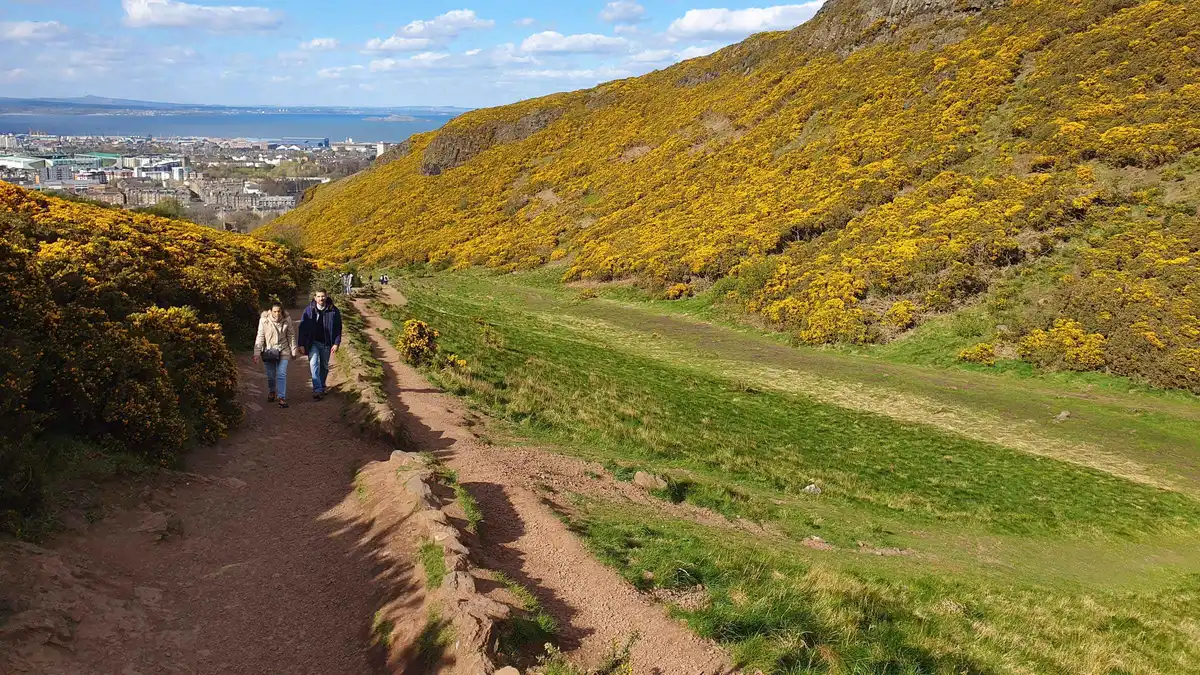
Edinburgh: Guided Hike to Arthur's Seat and Holyrood Park
Two hours up Arthur's Seat by the local paths rather than the tourist route, with time in Holyrood Park on the way. Bring your own food and water; there are no toilets once you start.
Check Availability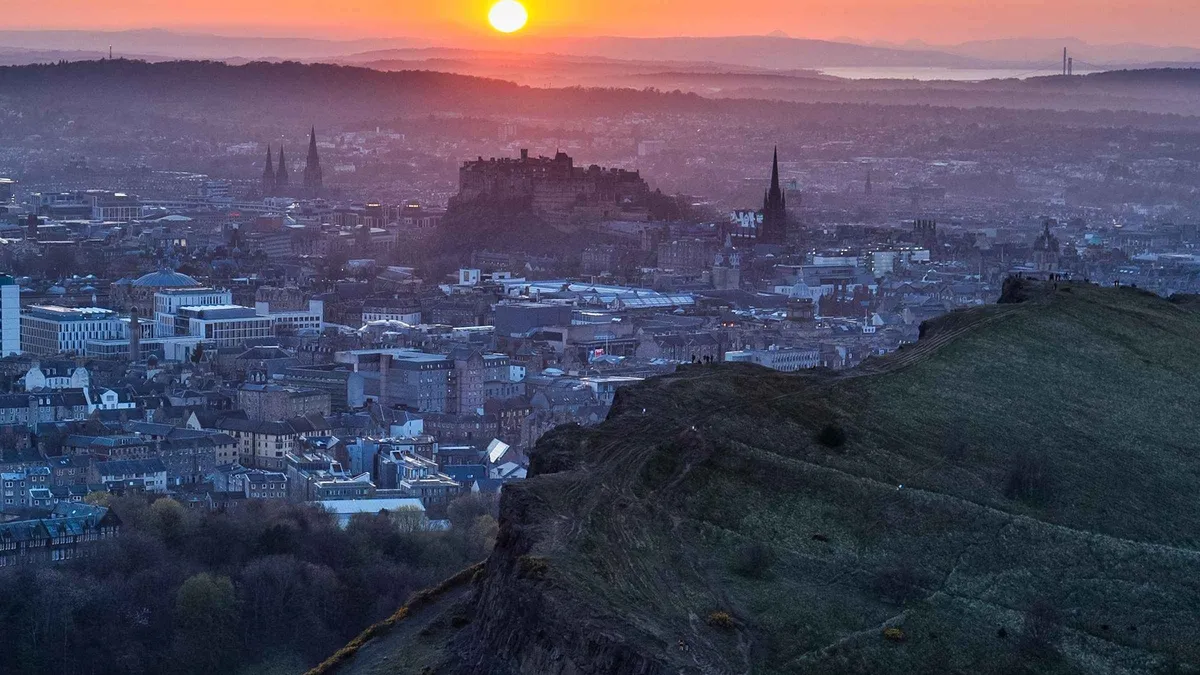 from £45
Arthur's Seat Sunset Hike
Timed so the summit lands at sunset, then a torch-lit descent on a quieter route — that timing is what the higher price buys. Led by a qualified Mountain Leader, 250 metres of climbing.
Check Availability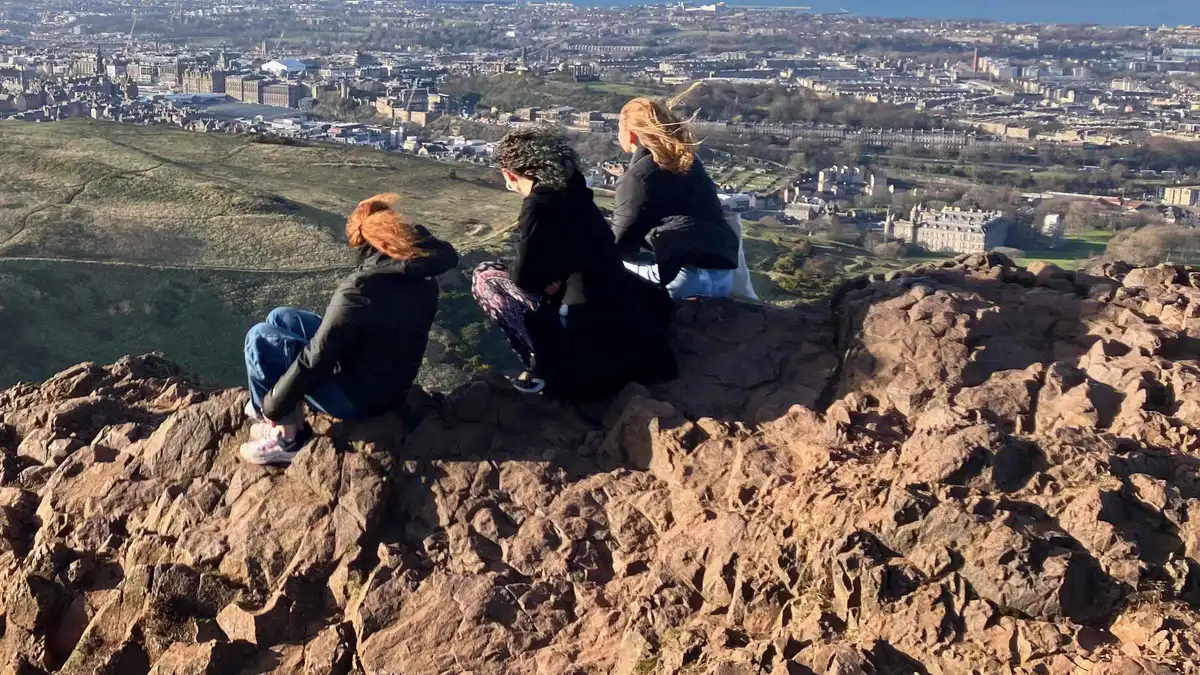 from £26
Edinburgh: Hike Arthur's Seat & Calton Hill
Adds Calton Hill and its monuments to the Arthur's Seat climb, four miles end to end across three hours at a gentle pace. Starts at Waterloo Place and finishes at the Holyrood car park.
Check AvailabilityPrices, ratings and details are the platform's own, checked 2026-08-30; dollar figures are the listed prices — the platform bills in your account's currency.
What to take, and how to get to the bottom of the hill
Shoes with grip, a windproof layer, and water you are carrying yourself — there is nowhere to buy any on the hill, and the toilets are back down at the Education Centre. A torch if you are within an hour of sunset, because the paths are unlit and nothing marks the edges. That is the whole kit list, and the first item is the one that matters: Historic Environment Scotland asks for sturdy shoes with good grip, and the descent is where people fall.
Getting there costs nothing if you are already on the Royal Mile: walk to the bottom, cross at the Scottish Parliament, and the park entrance is opposite. By bus a Lothian single is £2.40 (about $3.30) and a City DAY ticket £6.00 (about $8.20), while tapping the same card all day caps at £5.70 (about $7.75); cash on board must be exact. Driving is worse than useless — Broad Pavement Car Park charges £1 an hour (about $1.40), membership does not exempt you, and every park road shuts to cars all weekend. How the fares and cards work covers the ticket.
The questions people ask before they decide to climb
How hard is the climb up Arthur's Seat really?
Harder than a park walk, easier than a mountain. From the Palace end you gain the full 250.5 m from near sea level over 45 to 60 minutes at an unhurried pace, on eroded paths, with bare rock for the last few metres where you will use your hands. Historic Environment Scotland publishes no walking times at all — those are our estimates — and its own safety line warns of sheer drops and slippery surfaces. The four routes compared sets out the easiest of them.
Do I need walking boots, or will trainers do?
Trainers with real tread are enough in dry weather, and boots are not required by anyone. The official line is Historic Environment Scotland's — wear sturdy shoes with good grip — and it stops there; no authority specifies footwear beyond that. Our own judgement is what fills the gap: smooth city soles are the commonest mistake on this hill, because the volcanic rock polishes where thousands of feet cross it and behaves like wet tile after rain, which is most weeks here. Boots earn their place in winter, when the upper paths hold ice long after the streets have cleared. Either way the descent is where people go over, not the climb.
Is there a cheaper or easier view of Edinburgh than Arthur's Seat?
Arthur's Seat is already free, so the question is really about effort. Calton Hill is the answer: about 100 metres up a staircase off Waterloo Place, roughly ten minutes, no ticket, and it is where the castle-and-ridge photograph is taken from. If you want a paid balcony instead, the Nelson Monument on that hill is £7.50 with the tower (about $10) and the Scott Monument is £9.00 (about $12).
Can you walk up Arthur's Seat at night?
Nothing prevents it — Historic Environment Scotland states the park is open twenty-four hours a day, year-round, with no gate. But there is no lighting anywhere on the hill, no handrails, and sheer drops on the Crags side, so a headtorch rather than a phone is the minimum, and the descent in the dark is the risky half.
Is the Radical Road open again?
No. It has been closed since 2018, when around fifty tons of rock came off the cliffs above it, and Historic Environment Scotland's live notice on 30 August 2026 still said only that it is working on reopening parts of the path later this summer, with no date. Ranger-guided walks are the only sanctioned way onto it. The upper path onto the crag top is open and is the replacement most people take.
How long should I allow for the whole outing?
About two hours door to door from the bottom of the Royal Mile, which is exactly the length the guided hike sells: 45 to 60 minutes up, twenty minutes at the top if the wind lets you, and a slower descent than you expect. From the Dunsapie Loch side the whole thing shrinks to about an hour.
Do I need to book anything to climb Arthur's Seat?
No. There is no ticket, no slot and no gate, and there never has been. The only bookings in the neighbourhood are the guided hikes and the paid sights around the hill — the Palace at its foot and the rest of the city's ticketed attractions. If you park, the £1 an hour (about $1.40) is paid on arrival, not reserved.
The Climb, Before You Commit an Hour to It
Three films that show the ground rather than the postcard — the routes compared, the easier line for tired legs, and what the walk is actually like underfoot.
The 3 Routes Up Arthur's Seat (And Which One Is Best for You?)
The path decision made visually, which is the part that decides whether this is an hour you enjoy or an hour you endure.
Video: Sports Travel TomAn easier route to enjoy the views from Arthur's Seat
The gentler line up the hill — the answer for anyone who wants the view without the full climb from the Palace end.
Video: Clan BroonfordWhy Arthur's Seat Is Edinburgh's Most Famous Walk
What the summit actually looks and feels like once you are on it, including the wind nobody photographs.
Video: Sports Travel TomVideos load from YouTube only when you press play.